On a historic building, slate versus tile is rarely an open question: the building was built with one of them, and restoration means matching the original material and method. Slate is the 100-year stone. Ludowici clay tile runs 75 to 100 years, and installed by an Elite Crown Roofer it carries a 75-year material warranty. Either way, the work starts with documenting what is already there.
Start with the original roof
Historic work starts with understanding what was there and why. We document existing conditions before anything comes off: the material, the profiles, the fastening, and the details at every hip, valley, and ridge. That record decides the restoration — not a catalog, and not a preference.
It is also where the surprises live. Discontinued tile profiles can be sourced and matched. Sound slate can be kept and blended with new stone, so the repair disappears into the roof.
When the answer is slate
Courthouses, churches, and landmark homes across the Southeast were roofed in slate because it was the permanent material — and a century later, many of those roofs are still on. Restoring one means stone matched for color and thickness, copper flashing that will outlast it, and coursing laid out the way the original was. Our slate and copper restoration at the Fayette County Courthouse is the pattern.
When the answer is tile
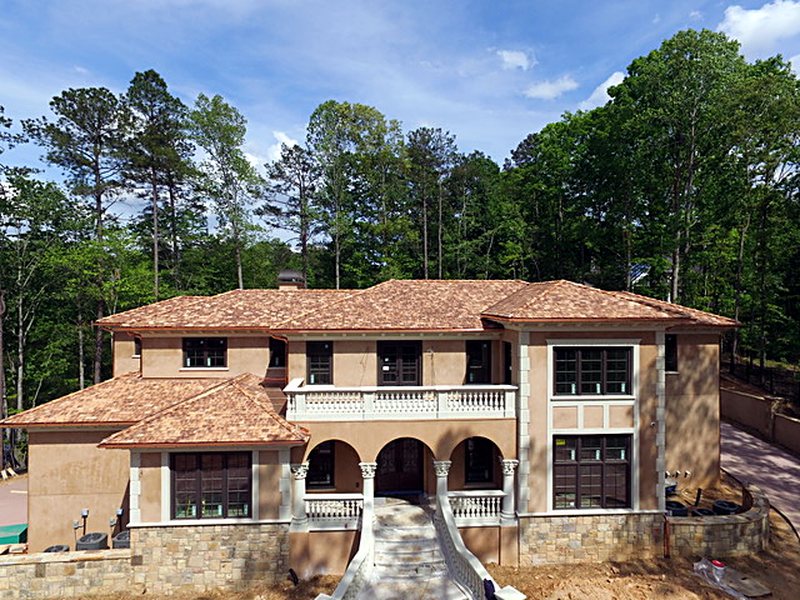
Mediterranean, Spanish, and grand traditional buildings were roofed in clay tile, and Ludowici has made that tile in Ohio since 1888. A tile restoration is a system job — battens, fastening, valleys, and the custom-fitted bonnet hip plate tiles that tie the hips together and are only available through Ludowici.
We have held Ludowici's Elite Crown Roofer certification — the program's top tier — since it began in 2012, and our Ludowici installations carry a 75-year material warranty.
Can you switch — tile to slate, or slate to tile?
It comes up, especially when an owner has fallen for the other material. The honest answer: switching changes the building. The structure has to carry the new material, the profiles and details change with it, and a landmark's character is part of what is being preserved. Our recommendation almost always starts with what the building was built with — and when someone proposes a switch, we walk through what it would really involve before anyone commits.
What does the choice cost?
Restoration cost turns on the building: how much original material can be kept, what the documentation finds underneath, and the material itself — and those costs move with the market. A flat figure published online would be a guess dressed as an answer. What we provide is a written proposal, after documentation, that tells you straight what is driving the number. Our historic restoration guide covers how that process runs for churches, courthouses, and public buildings.
— Gary Shank